The Case for PKS
Why European Power Producers Choose Palm Kernel Shell
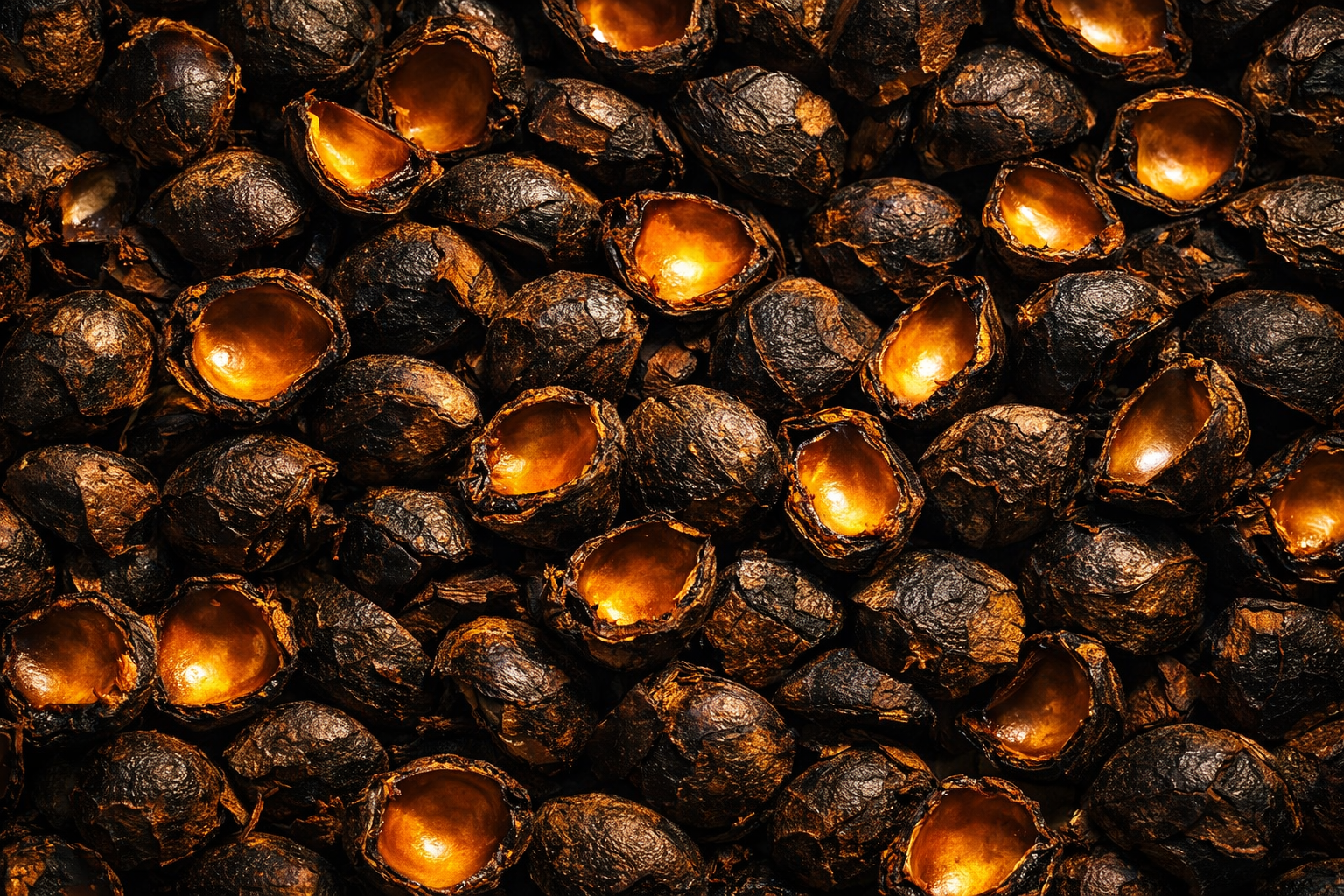
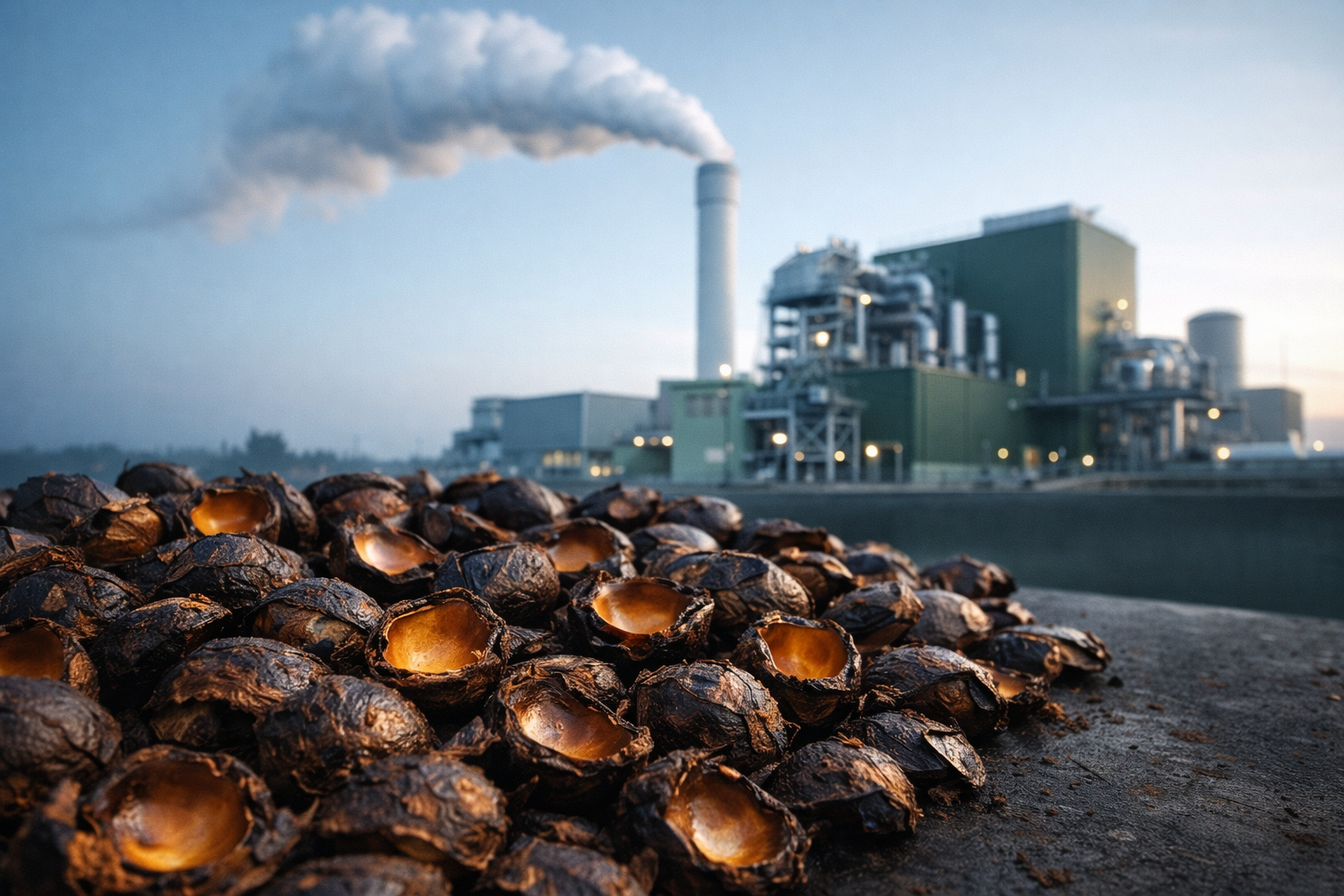
Palm Kernel Shell is the hard outer casing of the palm kernel, separated as a residual stream during crude palm oil production. Unlike purpose-grown energy crops, PKS requires no dedicated land clearing, no additional fertilisation, and no incremental water use — it is a true industrial byproduct that would otherwise be combusted on-site at the mill. This origin places PKS in a fundamentally different sustainability category from wood pellets produced via dedicated forestry.
For European co-firing operators, PKS delivers a calorific value of 16–19 MJ/kg on an as-received basis — sufficient for blending ratios of 10–30% in existing pulverised coal boilers without major capital modifications to handling or milling equipment. The material's low sulphur content (typically <0.08%) reduces SOx compliance costs, and its ash fusion temperature above 1,200°C is compatible with standard slag-handling infrastructure.
Under EU RED II, certified PKS from MSPO or ISCC supply chains achieves lifecycle GHG savings of up to 70% compared to coal — satisfying the minimum 70% threshold required for existing installations under Article 29.10 from 2026. Our documentation package provides the GHG calculation worksheets, chain-of-custody certificates, and no-deforestation attestations needed by your compliance and sustainability teams.
"PKS is the only large-volume biomass commodity that is simultaneously a certified byproduct, RED II compliant, and deliverable at Supramax scale into existing European port infrastructure — without the capital cost of pellet handling modifications."