What is Palm Kernel Shell?

Palm Kernel Shell (PKS) is the hard, lignin-rich outer casing of the palm kernel — the inner seed of the oil palm fruit (Elaeis guineensis). During the processing of fresh fruit bunches at a palm oil mill, the palm kernel is separated from the mesocarp fibre and cracked to extract the palm kernel oil. The shell residue, typically accounting for 6–7% of fresh fruit bunch weight, is the material we supply as a solid biofuel.

PKS is a true industrial byproduct. It does not require any dedicated cultivation, land preparation, or agricultural input beyond what is already committed to palm oil production. At the mill level, PKS has traditionally been combusted in boilers to generate process steam and electricity for the mill itself. The surplus over mill energy needs — and increasingly, the full stream where mills have been upgraded to more efficient biomass boilers — is available for export as a certified biofuel commodity.

The material arrives at the European buyer in its natural form: irregular shell fragments ranging from 5mm to 50mm in size, dark brown to black in colour, with a characteristic smoky or woody odour. It can be stored in open or covered bulk facilities, handled by standard conveyor and grab equipment, and combusted in pulverised coal boilers, stoker grates, and fluidised bed systems with minimal operational modification.

PKSEurope sources exclusively from MSPO- or ISCC-certified mills in Peninsular Malaysia, Sabah, Sarawak, Sumatra, and Kalimantan — regions with established palm oil processing infrastructure and regulatory oversight from MPOB (Malaysia Palm Oil Board) and the Indonesian ISPO framework respectively.
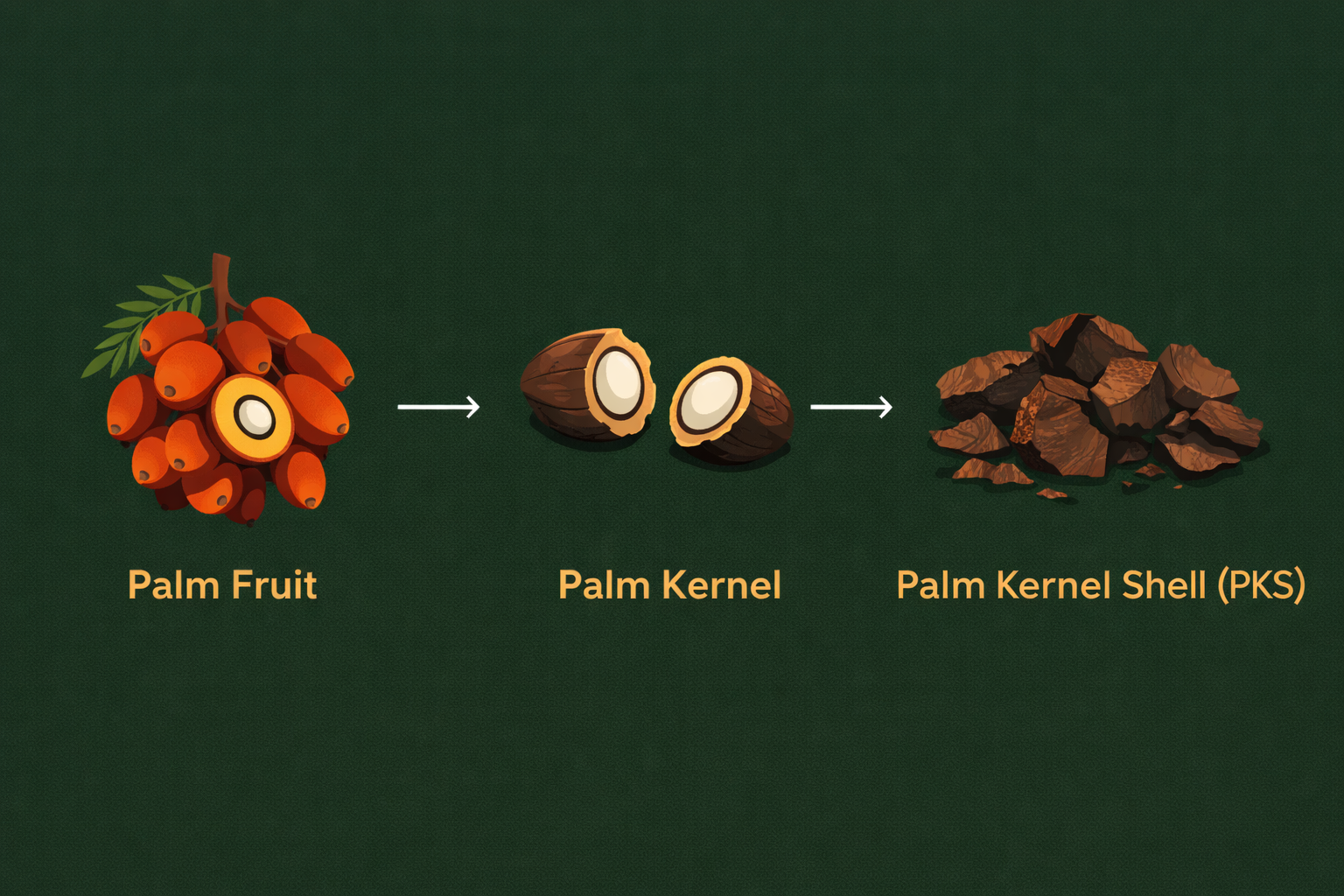
Palm kernel shell production process: Palm Fruit → Palm Kernel → Palm Kernel Shell (PKS)

PKS at a Glance — Key Facts for European Buyers

Global PKS Production ~6.5 million MT / year
EU RED II Status Eligible under Article 29
GHG Savings vs. Coal Up to 70% lifecycle reduction
Co-firing Compatibility Direct drop-in (PF, stoker, CFB)
Certification Pathway MSPO → ISCC → SBP chain of custody
Primary EU Import Port Rotterdam (ECT / OBA terminals)
PKSEurope Supply Capacity Up to 25,000 MT per shipment
Vessel Class Supramax (40,000–60,000 DWT)

Full Product Specifications

All parameters tested to ISO standards. Pre-shipment analysis conducted by SGS or Bureau Veritas at load port.

Parameter Typical Range Basis Test Standard
Gross Calorific Value (GCV) 4,000 – 4,500 kcal/kg Air Dried (AD) ISO 18125
Net Calorific Value (NCV) 15 – 17 GJ/MT As Received (ARB) ISO 18125
Total Moisture 10 – 18% As Received ISO 18134
Ash Content 2.5 – 4.5% Air Dried ISO 18122
Ash Deformation Temperature (IDT) > 1,200°C Reducing atmosphere ISO 21404
Bulk Density 520 – 650 kg/m³ Loose / settled ISO 17828
Total Sulphur < 0.08% Air Dried ISO 16994
Chlorine < 0.05% Air Dried ISO 16994
Nitrogen < 0.6% Air Dried ISO 16948
Foreign Material < 1% By weight Visual / sieve
Size Distribution 5 – 50mm Nominal Sieve analysis
Origins Peninsular Malaysia, Sabah, Sarawak; Sumatra (North, Riau, South), Kalimantan

All specifications are indicative ranges based on certified mill output. Pre-shipment SGS or Bureau Veritas inspection is available on all commercial cargoes. Final specifications are confirmed by independent survey at load port and are binding under the sales contract.

PKS vs Alternative Biomass Fuels

A direct technical and commercial comparison for European procurement managers evaluating solid biomass supply options.

Parameter PKS (Certified) Industrial Wood Pellets Steam Coal
Net Calorific Value (as-received) 17.5 – 19.5 MJ/kg 17.0 – 19.3 MJ/kg 22.0 – 28.0 MJ/kg
Moisture Content (as-received) 10 – 18% (export spec ≤15%) ≤10% (ENplus standard max) 8 – 12%
Ash Content (dry basis) 1.0 – 5.0% (typical 2 – 4%) ≤0.7% (ENplus A1 max) 8 – 15%
Bulk Density 550 – 740 kg/m³ 620 – 700 kg/m³ 750 – 900 kg/m³
Sulphur Content (dry basis) 0.01 – 0.08% ≤0.03% (ENplus standard max) 0.4 – 1.0%
RED II Eligible Yes — ISCC EU / SBP certification Yes — SBP / FSC / PEFC certification No (fossil fuel)
GHG Saving vs. Coal (lifecycle) ¹ 70 – 85% (certified supply with mill biogas capture) 70 – 90% (residue-sourced) Baseline — 0%
Handling Infrastructure Standard bulk — grab / conveyor; no modification required Dedicated pellet handling; enclosed conveying required Standard coal infrastructure — direct drop-in
Typical CIF Rotterdam (USD/t) $135 – 175/t ² $150 – 230/t (spot, 2023 – 2024) $100 – 140/t (ARA spot, 2023 – 2024)
Minimum Bulk Shipment 10,000 – 25,000 MT (Handysize / Supramax) 15,000 – 75,000 MT (Handymax / Panamax) 50,000 – 150,000 MT (Panamax / Capesize)
Deforestation Risk None — certified agricultural byproduct; no dedicated cultivation Low to moderate — linked to forestry; certification-dependent Not applicable

¹ GHG savings under EU RED II lifecycle methodology. PKS figure applies to certified supply chains with biogas capture at mill; saving is sensitive to certification methodology and shipping distance (Sato et al., 2022, GCB Bioenergy). RED III threshold rises to ≥80% for large existing installations from 2026.  ² PKS CIF Rotterdam estimate based on FOB East Sumatra/Malaysia (Argus Media PKS price index) plus indicative freight of $25 – 40/t. Wood pellets and coal prices: Argus Media CIF NWE/ARA spot index.

Malaysian and Indonesian Origin — Why It Matters

Malaysia — MSPO / MPOB Regulated

Peninsular Malaysia, Sabah & Sarawak

Malaysia is the world's second-largest palm oil producer, with a domestic regulatory framework administered by the Malaysian Palm Oil Board (MPOB). All licensed palm oil mills are subject to MPOB oversight, and MSPO (Malaysian Sustainable Palm Oil) certification has been mandatory for all Malaysian palm oil producers since 2020.

MSPO is a national sustainability standard developed in alignment with RSPO and ISO 14001 principles, covering land rights, environmental management, labour practices, and supply chain traceability. For European buyers operating under RED II, MSPO certification — combined with ISCC EU chain-of-custody overlay — provides the regulatory chain of custody required for renewable energy compliance claims.

PKSEurope's Malaysian supply relationships span mills in Peninsular Malaysia, Sabah, and Sarawak — providing geographic diversity across three distinct production regions, each with established export infrastructure to Johor Bahru, Kota Kinabalu, and Bintulu load ports.

Indonesia — ISCC Certified / ISPO Framework

Sumatra & Kalimantan

Indonesia is the world's largest palm oil producer, with over 15 million hectares of oil palm cultivation concentrated in Sumatra and Kalimantan. The Indonesian Sustainable Palm Oil (ISPO) standard provides the national regulatory framework, with ISCC EU certification available for mills targeting European export markets.

PKSEurope sources Indonesian PKS exclusively from ISCC EU-certified mills, ensuring that all GHG calculations, land-use assessments, and no-deforestation criteria are independently audited and documented. Indonesian supply adds scale and geographic redundancy to our supply program — Sumatra-origin PKS is typically loaded at Belawan, Dumai, or Palembang, with Kalimantan material routed via Banjarmasin or Sampit.

The combination of Malaysian and Indonesian origin gives PKSEurope the supply depth to fulfil quarterly and annual contracts without single-origin dependence — an important risk management consideration for European buyers with long-term supply commitments to their own customers or regulators.

From Mill to Discharge — Quality and Documentation

Every PKSEurope commercial cargo is supported by a standard quality assurance and documentation chain from origin to discharge.

1

Mill Certification

PKSEurope works to source from mills holding active MSPO and/or ISCC EU certification. We review certification status and chain-of-custody scope as part of our supplier assessment process and aim to confirm validity before any commercial contract is signed.

2

Third-Party Survey — SGS or Bureau Veritas

An independent pre-shipment survey is conducted by SGS or Bureau Veritas at the load port. The survey covers draft survey (weight determination), quality sampling and analysis (GCV, moisture, ash, sulphur), and cargo condition assessment. The resulting quality certificate is the binding reference specification for the cargo under the sales contract.

3

Bill of Lading Documentation

A full set of shipping documents is issued at load port: clean on-board bill of lading, commercial invoice, packing list, certificate of origin, phytosanitary certificate, and fumigation certificate. These are transmitted to the buyer or their bank upon vessel departure, in accordance with the agreed payment terms.

4

Discharge Port Survey

An outturn survey at the European discharge port — Rotterdam, Hamburg, or Gdansk — determines final received weight and quality for any contractual adjustments. PKSEurope recommends that buyers appoint their own independent surveyor at discharge.

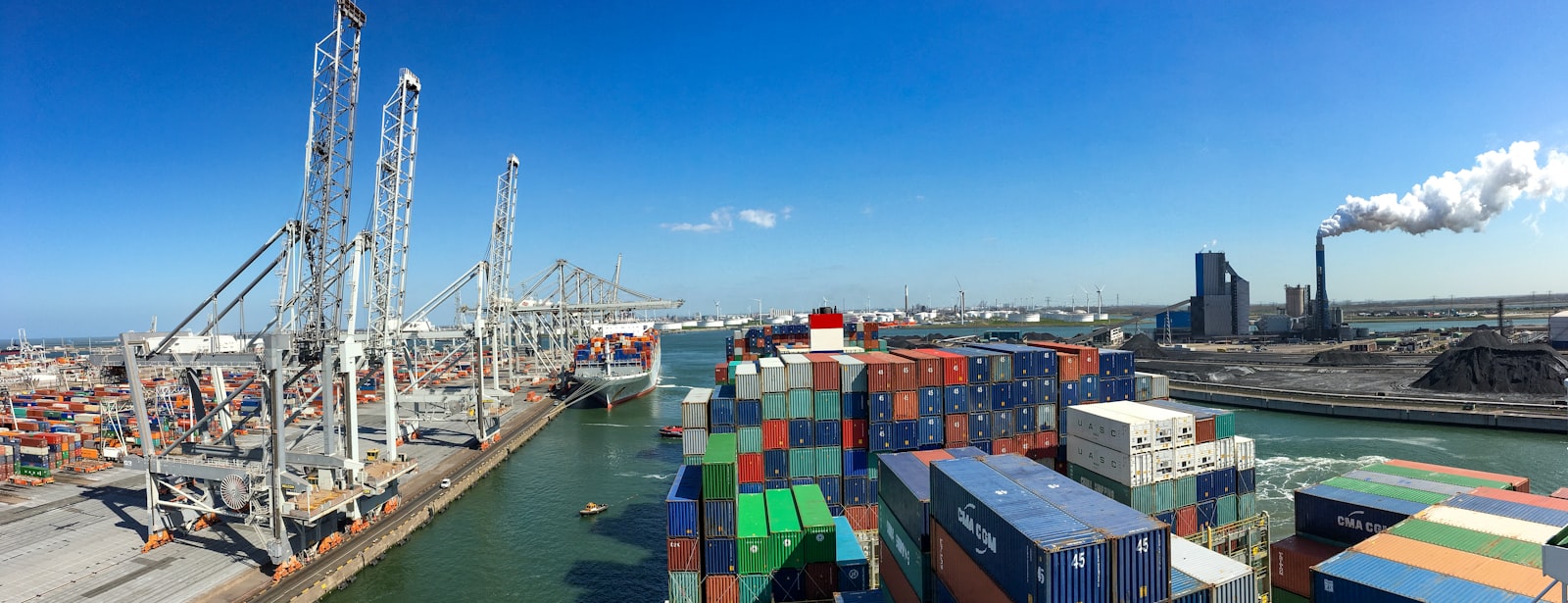
Container vessel at port — bulk cargo shipping Third-party cargo inspection — quality sampling and analysis

Frequently Asked Questions

Answers for procurement managers, compliance teams, and commodity buyers evaluating PKS supply from PKSEurope.

Yes. Palm Kernel Shell qualifies as an eligible biomass fuel under EU Renewable Energy Directive II (RED II) Article 29, provided it originates from certified supply chains that meet the sustainability criteria. PKS from MSPO- or ISCC-certified mills satisfies the land-use, no-deforestation, and biodiversity requirements of Article 29. On a lifecycle GHG basis, certified PKS typically achieves 65–70% savings against the fossil fuel comparator (coal), which meets the minimum threshold of 70% required for existing installations from 2026. PKSEurope supplies the full documentation package — GHG worksheets, chain-of-custody certificates, and attestations — as standard with every commercial cargo.

European import of PKS for renewable energy applications under RED II requires supply chain certification from a scheme recognised by the European Commission. The two primary applicable schemes for PKS are ISCC EU (International Sustainability and Carbon Certification) and MSPO (Malaysian Sustainable Palm Oil), which has been recognised under a dedicated agreement. SBP (Sustainable Biomass Program) certification is also relevant for specific buyer requirements. At a minimum, buyers should require ISCC EU chain-of-custody certification covering the mill, trader, and shipping agent. PKSEurope works exclusively with certified supply chains and can provide the relevant certificates for any commercial cargo upon request.

PKSEurope's commercial supply programs are structured around full Supramax vessel cargoes, which range from approximately 40,000 to 60,000 deadweight tonnes (DWT) in vessel capacity, with typical PKS cargo sizes of 15,000 to 25,000 metric tonnes per shipment. This reflects the economics of transoceanic bulk commodity trade from Southeast Asia to Europe. For buyers with smaller annual requirements, PKSEurope is able to discuss co-loading arrangements or Rotterdam warehouse delivery programs on a case-by-case basis. Contact our team to discuss your annual volume requirements and we will structure a supply proposal accordingly.

PKS and wood pellets are both widely used solid biomass fuels in European co-firing applications, but they have distinct characteristics. PKS has a slightly lower net calorific value (15–17 GJ/MT for PKS versus 17–18 GJ/MT for industrial wood pellets on an as-received basis), but PKS requires no pelletisation energy input and no dedicated forest feedstock. On a total delivered cost basis, PKS is typically more competitive than premium-grade wood pellets for buyers who can handle bulk unprocessed material in their existing port and storage infrastructure. PKS's larger particle size (5–50mm) means it does not require pellet-specific storage handling — a meaningful capital expenditure advantage for buyers retrofitting existing facilities.