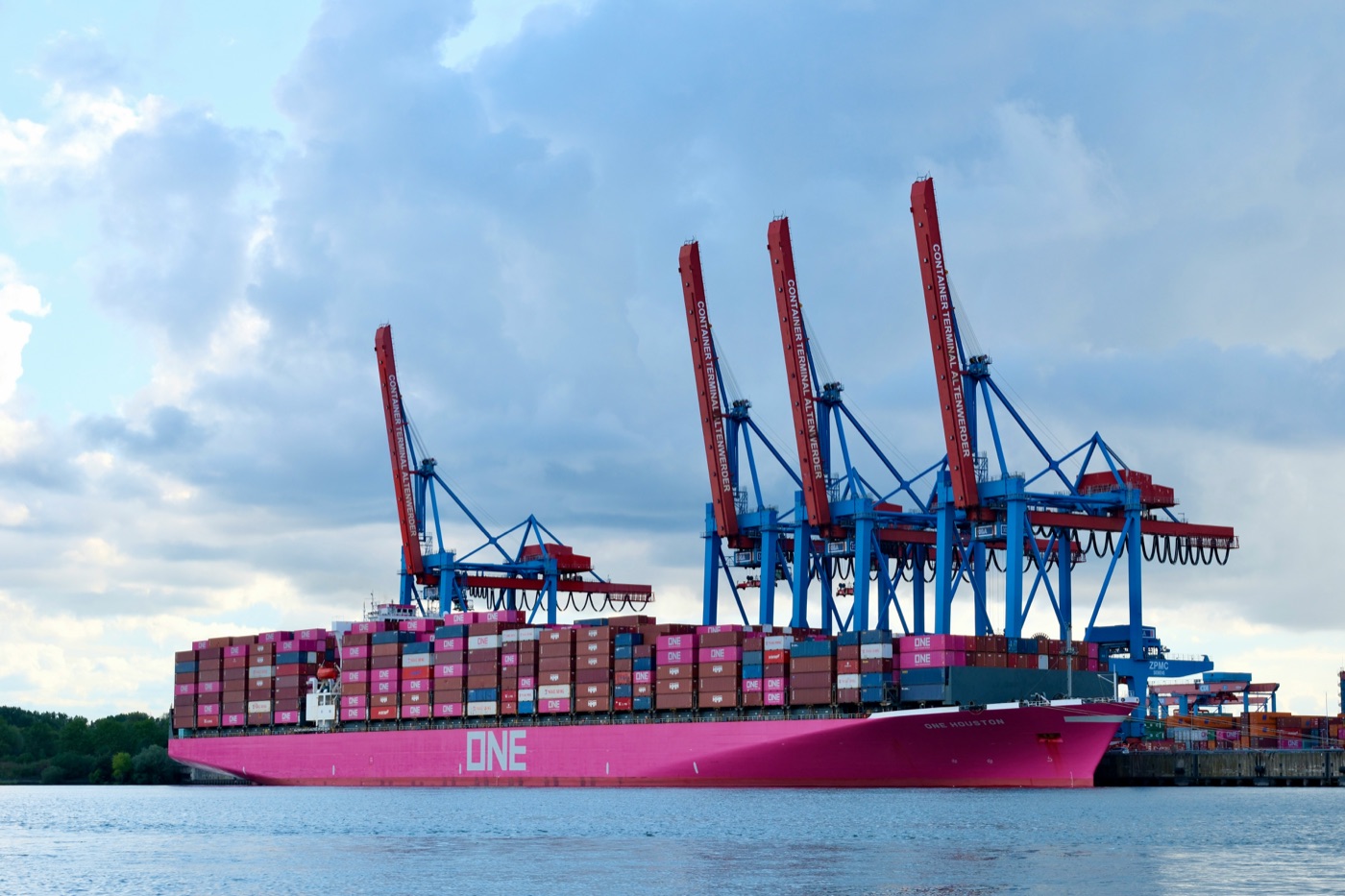
For European biomass buyers, CIF Rotterdam is the universal reference point for PKS pricing. It is where Southeast Asian supply meets European demand — where Supramax vessels discharge after a 25–35 day voyage from Malaysian and Indonesian loading ports, and where the price signals that flow back up the supply chain originate. Understanding how CIF Rotterdam pricing is constructed, what drives its movements, and how it compares to wood pellet pricing on a cost-per-GJ basis is the foundation of effective PKS procurement.
This article is written for procurement managers who are either evaluating PKS for the first time or who have been buying on the spot market and are now looking to structure more disciplined, benchmarked supply agreements.
How CIF Rotterdam Pricing Is Constructed
A CIF (Cost, Insurance, Freight) Rotterdam price for PKS bundles three components: the FOB (Free on Board) price at the loading port in Malaysia or Indonesia, the ocean freight rate for the voyage to Rotterdam, and marine insurance. Understanding each component individually is important because they move for different reasons and at different timescales.
The FOB price at origin reflects the underlying cost of PKS at the palm oil mill — essentially a byproduct whose value is determined by the opportunity cost of using it for on-site energy generation versus selling it externally. As European demand for certified PKS has grown, origin FOB prices have risen accordingly, and the spread between certified (MSPO/ISCC) and uncertified PKS has widened. Buyers seeking certified supply should expect to pay a certification premium of $5–12/MT FOB, which reflects the audit, documentation, and chain-of-custody costs borne by compliant suppliers.
Ocean freight for the Southeast Asia to Rotterdam route tracks the broader Supramax dry bulk market, with PKS shipping typically priced off the Supramax Baltic Exchange indices with a route-specific adjustment. Freight market volatility can swing CIF Rotterdam prices by $15–25/MT within a single quarter, which is why buyers with meaningful annual volume are well-served by considering index-linked freight clauses in their supply contracts rather than fixed-freight CIF pricing.
Price Drivers and Market Dynamics
Several factors drive PKS price movements beyond freight. Origin production volumes are influenced by crude palm oil output, which follows a seasonal pattern peaking in the third and fourth quarters of the year in Peninsular Malaysia. When CPO output is high, PKS availability is strong and origin prices tend to soften. In the first half of the year, tighter origin supply creates upward price pressure.
European demand seasonality also plays a role. Northern European power and heat demand peaks in Q1 and Q4, driving spot PKS procurement activity into year-end. Buyers who lock in CIF pricing for Q1 deliveries during Q3 of the prior year typically secure more competitive pricing than those sourcing on spot close to the delivery window.
The relationship between PKS and wood pellet pricing matters to European buyers because many co-firing operators can substitute between feedstocks at the margin. When PKS prices rise relative to wood pellets on a per-GJ basis, demand can shift toward pellets; when the spread widens in PKS's favour, as has generally been the case since 2022, PKS gains market share. Tracking the spread between CIF Rotterdam PKS (adjusted for calorific value) and CIF ARA wood pellets is a useful monitor of relative competitiveness.
Comparing Cost Per GJ: PKS vs Wood Pellets
The correct basis for comparing PKS and wood pellet pricing is delivered cost per gigajoule at the point of combustion, not nominal cost per metric tonne. A representative comparison using 2025–2026 average market prices illustrates the gap: wood pellets at CIF Rotterdam €145/MT with 16.8 MJ/kg NCV deliver energy at approximately €8.63/GJ; PKS at CIF Rotterdam €115/MT with 17.5 MJ/kg NCV delivers energy at approximately €6.57/GJ — a differential of roughly 24% in favour of PKS. This spread narrows when port handling and storage costs are added if existing infrastructure is not biomass-optimised, but remains substantial even after accounting for these operational differences.
See the PKSEurope product specification for the as-received calorific value ranges applicable to specific supply programs, as calorific value variance at loading affects cost-per-GJ calculations.
Structuring an Effective RFQ
Buyers who issue poorly structured RFQs attract poorly structured offers. An effective PKS RFQ should specify the following parameters clearly: discharge port and laycan window, cargo size (gross and tolerance), minimum NCV on an as-received basis, maximum moisture content, maximum ash content, certification scheme required (ISCC EU, MSPO+ISCC, or SBP), documentation requirements including GHG calculation basis, and whether pricing is sought on a CIF, CFR, or DAP basis.
For buyers comfortable with commodity pricing mechanisms, specifying index-linked freight (pegged to a Baltic Exchange route with an agreed adjustment factor) and a fixed FOB component is the most transparent approach for long-term agreements. This allows both parties to monitor and verify the price components independently.
Buyers new to PKS procurement are encouraged to run parallel RFQ processes with at least three suppliers to establish a market reference before committing to contract. Contact PKSEurope to receive a formal offer against your RFQ specification, including a delivered cost-per-GJ comparison against current wood pellet pricing at your discharge port.
Request a Current CIF Rotterdam PKS Price Indication
PKSEurope provides current price indications and formal offers for European discharge ports. Share your specifications and we will respond within 24 hours.
Request Price Indication